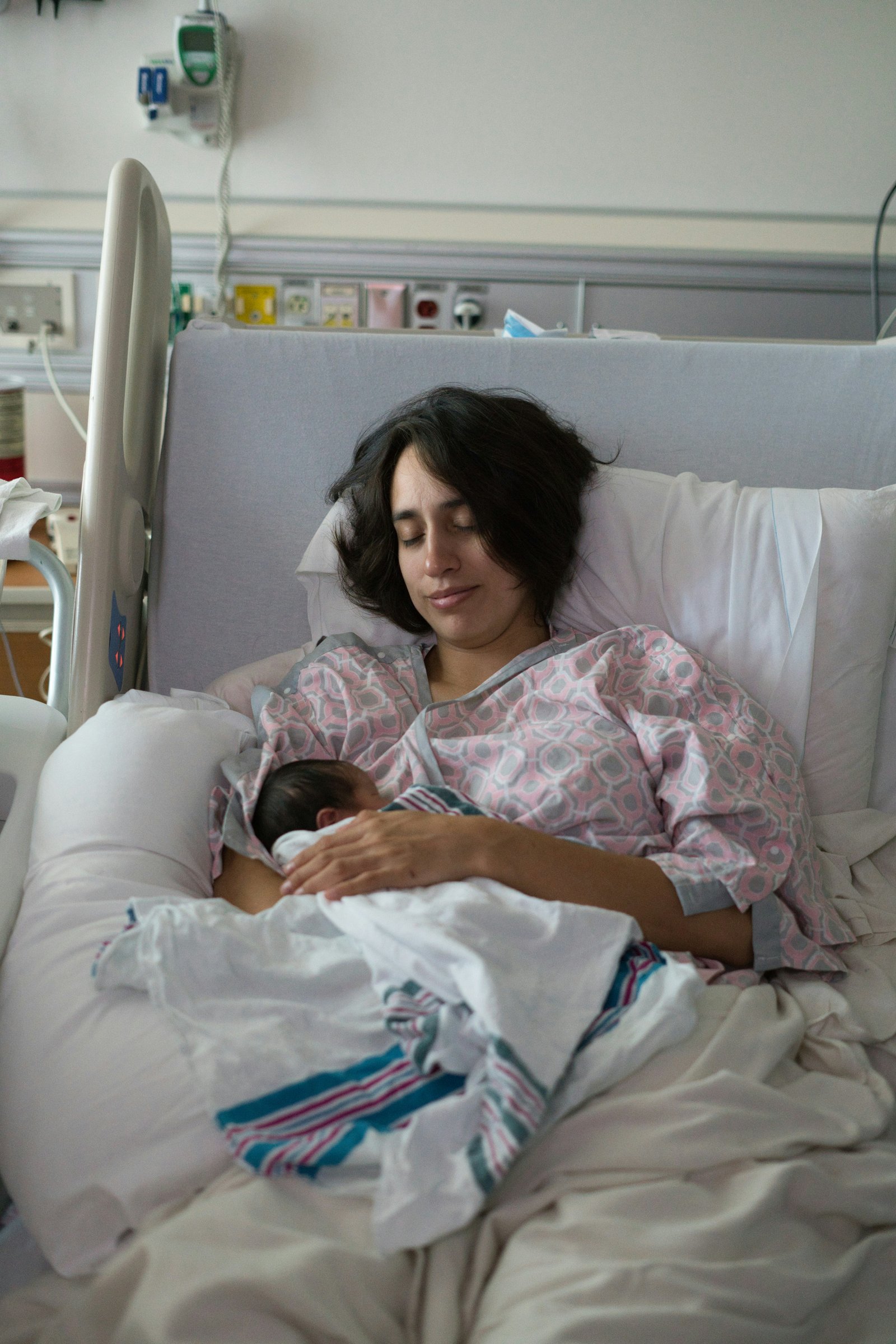
You’re tired, of course. Your body has just been through an enormous experience. Your sleep is already broken. But there may also be excitement, visitors, hospital support, messages coming in, and the surreal feeling of finally meeting the baby you’ve been waiting for.
Then a few days later, something shifts.
You cry over something tiny.
You suddenly feel completely drained.
The nights seem much longer.
Your body hurts more than you expected.
Feeding feels relentless.
And you find yourself wondering:
Why did I feel okay at first and why does everything suddenly feel so much harder now?
For many new mothers, that shift can be part of the very normal physical and emotional adjustment that happens in the first days after birth.
The First Few Days Can Be Deceptive
Birthing is intense.
Whether you had a vaginal delivery or C-section, your body has undergone a significant physical event and at the same time, your entire life has changed.
But immediately after birth, there is often a lot happening around you.
There may be nurses checking in.
Family and friends are messaging.
You’re learning how to feed your baby.
You’re taking photos.
You’re running on very little sleep, but there’s also excitement and stimulation keeping you going.
For some parents, it isn’t until they get home and things become quieter that the reality of recovery begins to land.
And suddenly, the tiredness feels different.
Then Your Body Starts Catching Up
After birth, hormone levels change rapidly.
Those shifts are one reason many mothers experience what is commonly called the baby blues; feelings such as tearfulness, irritability, anxiety, mood swings or feeling overwhelmed during the first days after delivery. These feelings often peak within the first several days and usually improve within about two weeks.
At the same time, your body is still healing.
You may be dealing with:
- postpartum bleeding
- uterine cramping
- soreness or stitches
- C-section discomfort
- breast changes as milk production increases
- swelling
- constipation
- sleep deprivation
- feeding around the clock
None of those things necessarily arrive one at a time.
They can all be happening together.
So what feels like a sudden “crash” may actually be several normal postpartum changes finally becoming noticeable at once.

Sleep Debt Adds Up Quickly
One difficult night is tiring.
Several nights of waking every two or three hours is something completely different.
During the newborn stage, it isn’t simply that you’re sleeping fewer hours.
Your sleep is constantly interrupted.
You may wake to feed.
Then change the baby.
Then burp them.
Then settle them.
Then finally lie down — only for the cycle to begin again.
And if you’re breastfeeding or pumping, feeding itself can take up a significant part of the night.
By day three, four or five, the sleep you missed earlier in the week has started accumulating.
That’s often when parents realise just how tired they actually are.
This is also why practical support matters so much during postpartum recovery. Canadian postpartum guidance specifically encourages new parents to ask for help and prioritize rest and support while adjusting to life with a newborn.
Feeding Can Become a Full-Time Job
Before having a baby, “feed every few hours” can sound straightforward.
Then you actually do it.
A feed may involve getting comfortable, breastfeeding or preparing a bottle, burping, changing, soothing, settling, cleaning bottles or pump parts — and possibly pumping afterward.
Then you look at the clock and realise you’re not very far from the next feed.
During periods of cluster feeding, it can feel even more continuous.
And while all of this is happening, you’re also supposed to eat, shower, recover and somehow sleep.
That mental and physical workload can be a shock, particularly once the initial excitement of coming home begins to settle.
Coming Home Can Be the Moment Everything Changes
There’s also a psychological difference between being in hospital and being at home.
In hospital, there are people around you.
Someone checks your vitals.
Someone can answer a question.
You can press a button if you’re worried.
Then you go home.
And suddenly the baby makes a strange noise at 2:17 a.m. and you and your partner are staring at each other wondering: “Is that normal?”
That responsibility can feel enormous.
Even very confident parents can experience moments of doubt during those first few days.
You are learning an entirely new person while simultaneously recovering yourself.
That is a lot.
You May Also Be Coming Down From the Excitement
Pregnancy often builds toward one enormous event: the birth.
Appointments. Preparation. The hospital bag.
The nursery. The countdown. Then suddenly — baby is here.
People visit.
Messages arrive.
Everyone wants pictures.
And after a few days, life starts becoming quieter again.
That contrast can feel strange.
The world outside your home continues normally while your entire world has changed.
It can leave some new parents feeling emotional, isolated or simply overwhelmed by the permanence of everything that has happened.

This Is Where Support Can Make a Real Difference
Support does not necessarily mean somebody taking your baby away from you or managing your entire household.
Sometimes support is much simpler.
Someone holds and settles the baby while you shower. Someone washes the bottles and pump parts.
Someone brings you food. Someone looks after the baby while you sleep for a couple of hours.
Or someone takes over newborn care overnight so that you are not personally managing every diaper change, burp and wake-up.
The purpose of postpartum support is not to remove parents from caring for their baby.
It is to give them enough breathing room to recover, rest and adjust to everything that has changed.
And importantly, you do not have to wait until you are completely exhausted before asking for it.
Baby Blues and Postpartum Depression Are Not the Same Thing
It is also important not to dismiss every difficult postpartum feeling as simply exhaustion.
Baby blues are very common in the first days after birth and generally improve within the first couple of weeks. Postpartum depression, however, tends to be more intense, lasts longer and can interfere with everyday life.
Speak with your healthcare provider if your feelings are becoming more intense, are not improving, or you are struggling to care for yourself or your baby.
You should also seek urgent medical help for concerning physical or emotional symptoms after birth. Serious postpartum complications can occur after leaving hospital, and unusual or worrying symptoms should not simply be assumed to be part of normal recovery.
In British Columbia, you can also call 8-1-1 for health advice. If you believe you are experiencing a medical emergency, call 9-1-1.
You Don’t Have to Wait for the Crash
One of the best things families can do before a baby arrives is think beyond the birth itself.
Who will help once you’re home?
Who can give you a break during the day?
What happens when your partner returns to work?
Who can help overnight if you’re struggling to sleep?
What happens when visiting family goes home?
Planning support does not mean assuming postpartum life will be difficult.
It simply means giving yourself options.
At Postpartum Partners, we provide in-home postpartum and newborn support across Metro Vancouver and Kamloops, including overnight newborn care.
Whether you’re planning ahead during pregnancy or you’ve already brought your baby home and realised you could use an extra pair of hands, support can be built around what your family actually needs.