
Nobody hands you a baby after knee surgery and says, “Off you go.“
But that’s close to what happens after a C-section.
You’ve had major abdominal surgery. A few days later you’re home, feeding and settling a newborn around the clock.
If laughing hurts, standing up straight feels impossible and you’re wondering whether this is normal, it very likely is.
Here’s what the first two weeks tend to look like, and how to make them gentler.
What has your body actually been through?
Two big things at once.
A birth. Your uterus is shrinking back down and your hormones are shifting. You’re also bleeding from where the placenta was attached, which happens after every birth, C-section included.
An operation. A surgeon made an incision through your lower abdomen and your uterus to deliver your baby.
The Ottawa Hospital’s recovery guide puts healing at around six weeks. It also notes that this depends on your circumstances, like how much you’re able to rest and whether you have other young children at home.
So if you feel like you’ve been hit by a truck, that’s a fair reading of events.
Days 1 to 3: what do the first days feel like?
Sore, slow and a bit shaky.
- Standing up for the first time is a moment. It can feel daunting. Going slowly, with a pillow held against your tummy, helps.
- Anything that uses your core hurts. Coughing, sneezing, laughing, rolling over. That same pillow, pressed to your belly, takes the edge off.
- You’ll bleed. In the first week it can be as heavy as a heavy period, sometimes with small clots. It often picks up when you get out of bed in the morning or while you’re feeding.
- You may get cramps on top of the incision pain. They can feel like period pain, and they’re your uterus shrinking back down.
- Pain relief matters. Most people need pain medication for the first couple of weeks. Taking it as prescribed is what lets you move, and moving is part of how you heal.
One thing to ask before you go home: was your incision closed with stitches that dissolve, or with staples that need taking out? Staples are usually removed a few days after surgery, so it helps to know who’s doing that and when.
Days 4 to 7: what changes when you get home?
For a start, you lose the call button.
A lot tends to arrive in this one week:
- You’re still sore. It’s normal to be tender around the incision for the first one to two weeks. The pain usually eases a little each day.
- Your incision looks worse than you expected. Some bruising, redness and swelling in the first days is normal, and it fades as you heal.
- Your emotions may dip. For many mums this is when the tears and overwhelm catch up. If low feelings last longer than two weeks, it’s worth talking to your doctor or midwife.
- The bathroom feels daunting. Straining is the thing to avoid. Fibre and plenty of fluids help, and your care team may suggest a gentle laxative for the first while.
- The tiredness is doubled. You’re healing from surgery on newborn sleep.
- This is the week extra hands make the biggest difference.
Week 2: why is this the week you might overdo it?
Because you start to feel better.
The pain has eased. You’re moving more freely. The house is a mess, and you think: I’ll just do one load of laundry. I’ll just carry the car seat in.
Then you pay for it that evening.
Feeling better isn’t the same as being healed. The skin is usually closed by five to six weeks, and full healing takes about six weeks.
A few things are common in week two:
- The tape strips come off. If you have small strips of tape over your incision, they usually fall off on their own after about a week. There’s no need to pull them.
- The scar feels odd. Numbness or itching around the area is common, and it can linger even after the incision has healed.
- The bleeding changes. It gets lighter and turns from red to a darker red or brown.
- Your energy comes in short bursts. One good hour doesn’t mean a good afternoon.
Bleeding can pick up again with activity. If it does after a busy day, that’s a good cue to slow back down.
What actually helps recovery?
Small things, done consistently.
- Stay ahead of the pain. Take your pain relief as prescribed, and ask what’s suitable if you’re breastfeeding. If the pain is getting worse or isn’t improving, that’s worth a call to your care provider.
- Roll, don’t sit up. To get out of bed, turn onto your side first, then push yourself up with your arms.
- Keep a pillow close. Hold it against your tummy when you cough, sneeze, laugh or stand.
- Walk a little, often. Gentle walking helps you recover. The Society of Obstetricians and Gynaecologists of Canada (SOGC) describes it as balancing rest with gentle movement to keep your blood circulating.
- Eat for healing. Foods rich in iron and fibre can help. A simple way to stay hydrated is a glass of water every time your baby feeds.
- Dress around the scar. Loose or high-waisted clothes keep waistbands off your incision.
- Keep the incision clean and dry. In the shower, let the water run gently over it. Pat it dry with a clean towel. No scrubbing, and no lotions or creams on it.
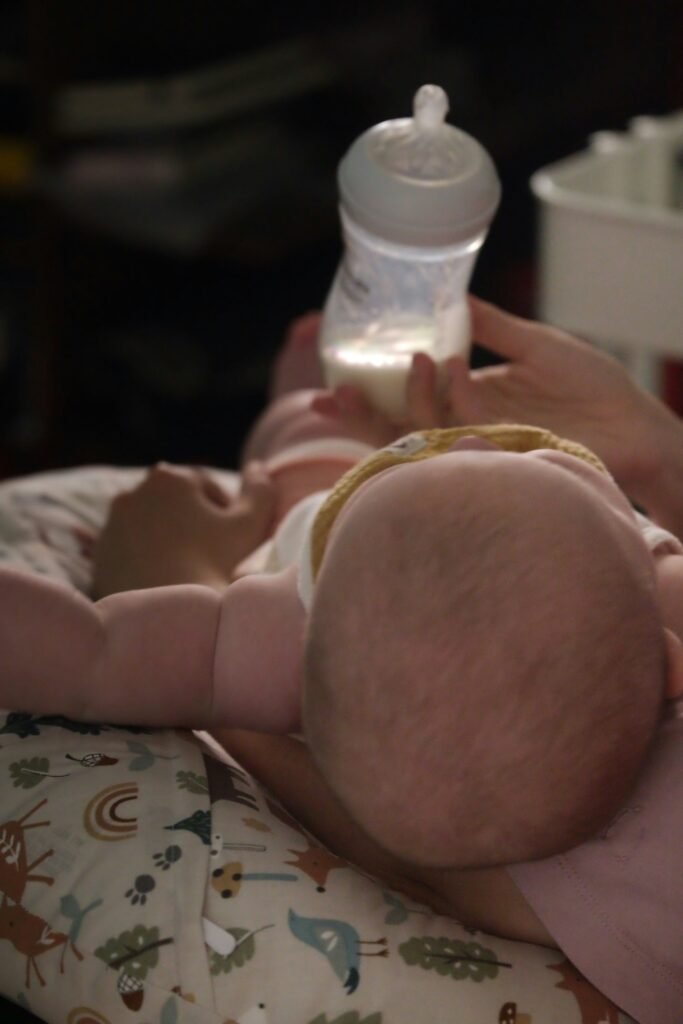
- Find a feeding position that spares your tummy. Your nurse, midwife or a lactation consultant can show you positions that keep your baby’s weight off your incision.
- Set up stations. Water, snacks, diapers, your phone and the pillow, all within reach of wherever you feed.
What’s worth holding off on?
Here’s what the SOGC and hospital guidance suggest waiting on. Your own doctor or midwife may give you a different timeline, and theirs comes first.
- Lifting. Nothing heavier than your baby for at least four weeks. That includes your baby in their car seat, which is heavier than it looks.
- Driving. The SOGC suggests avoiding it for the first four weeks. Other guidance ties it to being able to brake hard without hesitating and being off any pain medication that makes you drowsy.
- Strenuous exercise and core work. Running, sit-ups, crunches and planks wait at least six weeks.
- Baths, hot tubs and swimming. These wait until your provider says the incision has healed.
- Tampons, menstrual cups and sex. These wait for the first six weeks.
The list itself is simple. The hard part is that it only works if somebody else does the lifting.
So it helps to be specific when you ask. “Can you carry the laundry basket upstairs?” is easier to say yes to than “I need more help.”
When is it time to call?
Most people recover well. It still helps to know the signs that something needs attention.
Call 9-1-1 if you have:
- chest pain
- trouble breathing or shortness of breath
- a seizure
- thoughts of hurting yourself or your baby
Call your doctor or midwife, or go to an emergency department, if you have:
- bleeding that soaks through a pad in an hour, clots bigger than a plum, or you feel faint or light-headed
- a fever of 38°C or higher
- an incision that’s getting more red, swollen, warm or painful
- pus or bad-smelling fluid from the incision, red streaks spreading out from it, or an incision that opens
- vaginal discharge that smells bad
- a leg that’s red, swollen, painful or warm to touch
- a headache that won’t ease, or one that comes with changes in your vision
- pain that’s getting worse instead of better
In BC, you can also call 8-1-1 at any time to speak with a HealthLink BC nurse if you’re not sure.
And you don’t need a symptom from a list. “I know my body, and this doesn’t feel right” is reason enough to call.
What about how you feel about the birth?
Recovery isn’t only physical.
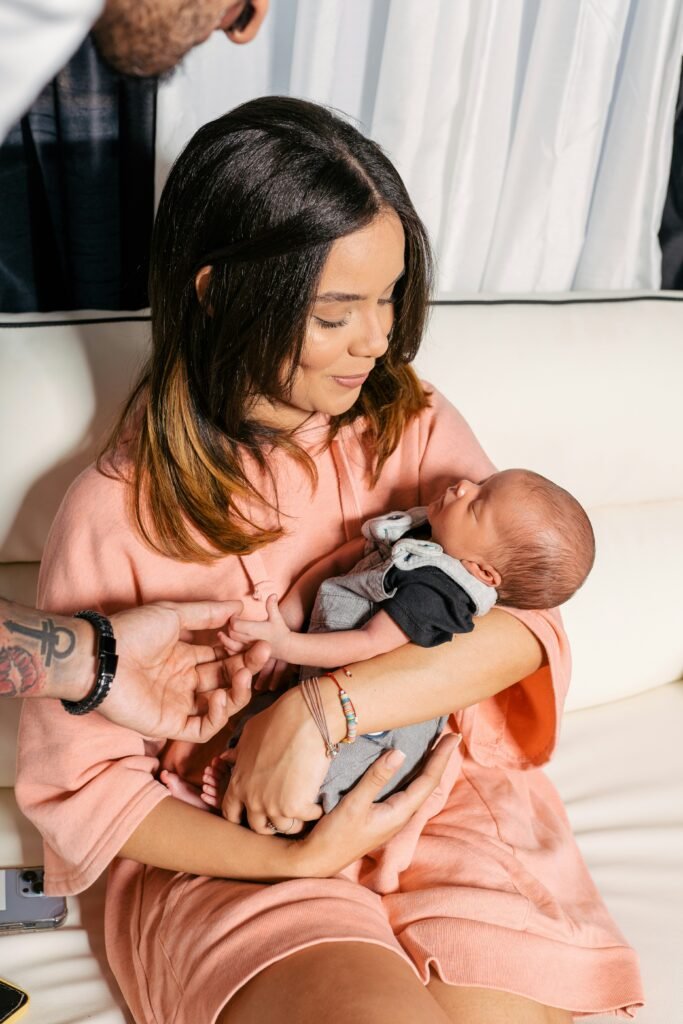
Giving birth can be overwhelming, and a C-section can bring its own mix of feelings, especially if it wasn’t what you’d planned.
You can be grateful your baby is here and still grieve the birth you’d pictured.
A C-section is a birth. You didn’t take an easier way.
If you find yourself replaying it, or you’ve felt tearful, low or anxious for more than two weeks, it’s worth talking to your doctor or midwife. Your six-week appointment is also a good time to ask about what happened in your surgery and what it means for any future births.
What happens after week two?
The first two weeks are the steepest part. The rest is slower and steadier.
- Weeks 3 and 4. You’ll likely feel more like yourself, but the lifting limit still applies.
- Weeks 4 to 6. Bleeding typically lasts four to six weeks in total, tapering as it goes.
- Around 6 to 8 weeks. At your follow-up appointment, your provider will let you know when it’s safe to return to regular physical activity. By six weeks, most people are back to normal day-to-day activities.
- Beyond that. The redness of the scar fades gradually. Numbness or itching can hang around longer.
Six weeks is a guide, not a deadline. Healing time depends on your own circumstances, including how much rest you’re able to get.
So what matters most in these two weeks?
You’ve had a baby and you’ve had surgery. Either one would earn you rest. You’ve done both.
The first two weeks come down to a few things: pain relief on time, a pillow within reach, short walks, and letting other people do the lifting.
Going slowly now isn’t falling behind. It’s how you heal.
If you’d like to talk through what support during your recovery could look like, we’d be happy to help.